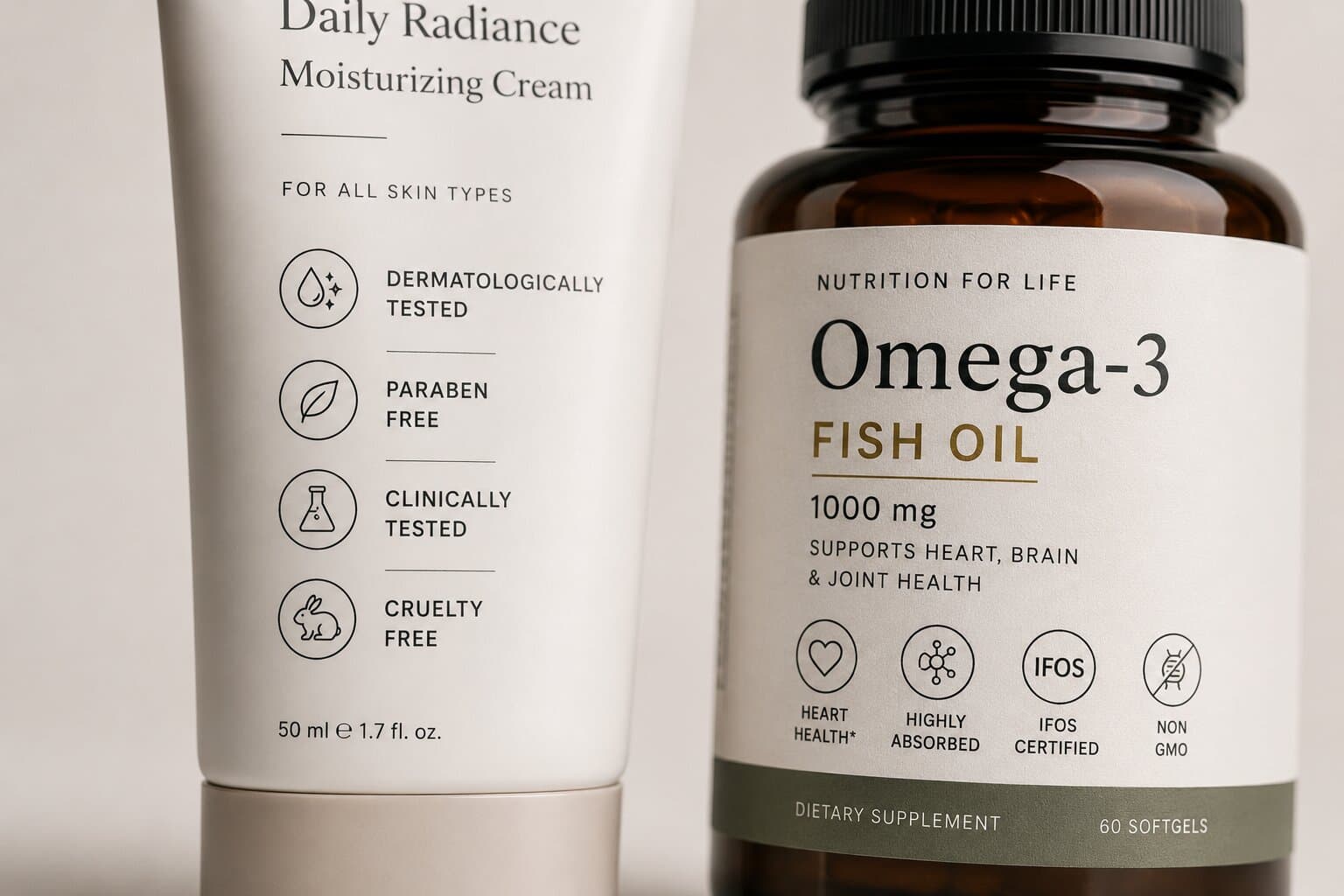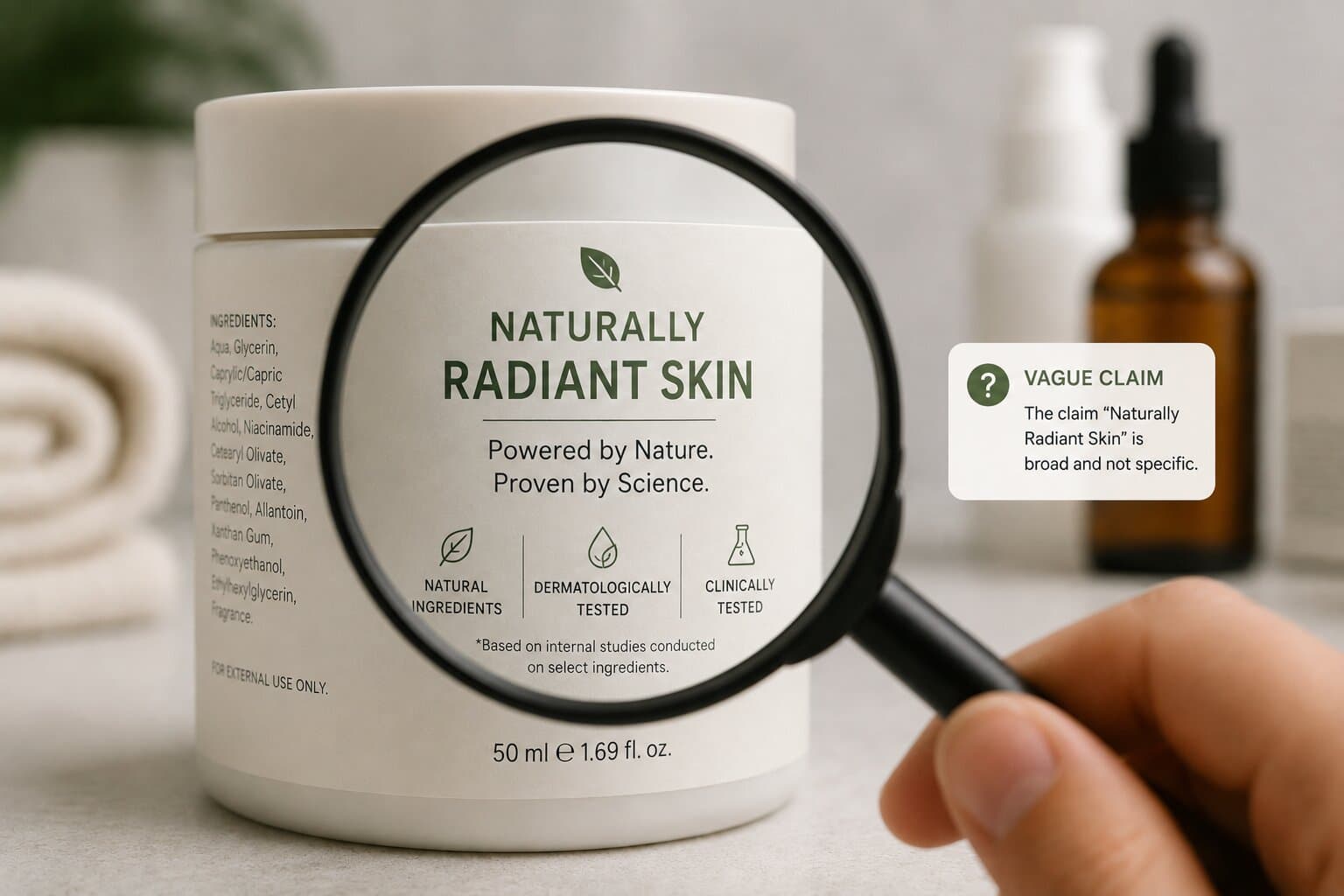
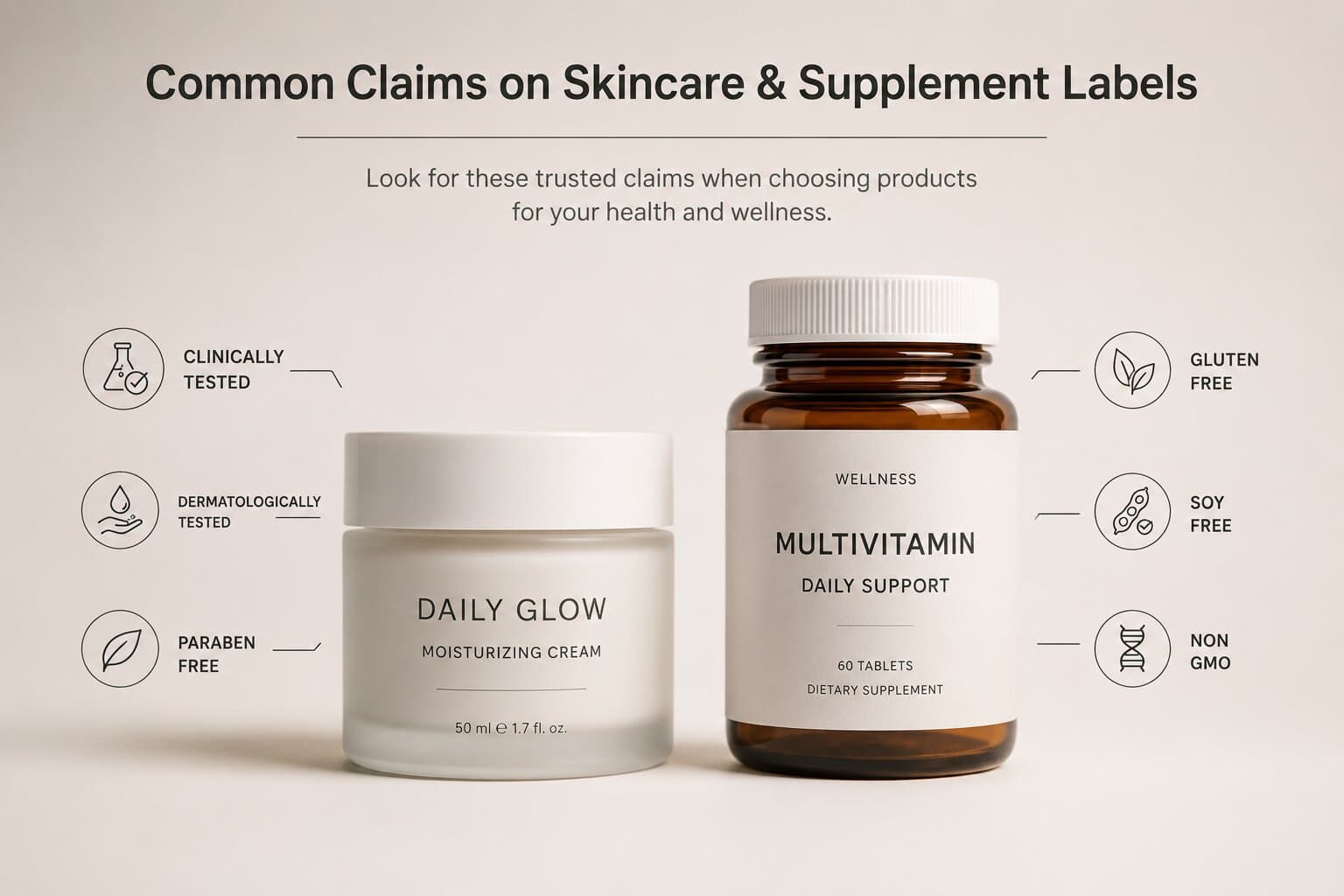
Pick up almost any skincare product, supplement, or personal care item, and you’ll find a phrase like this somewhere on the label: "Clinically Tested." "Paraben Free." "Dermatologically Tested." They’re everywhere, and they’re designed to reassure you. But reassurance isn’t the same as information.
The Problem With Label Phrases
These claims are short by necessity: packaging only has so much space. "Clinically Tested" might mean a full clinical trial with hundreds of participants, or it might mean a much smaller internal test with a handful of people. "Paraben Free" tells you what isn’t in the product, but not what’s used instead, or why that substitution matters to you specifically.
None of this makes the claim untrue. It just means the phrase on the front of the pack is a headline, not the article. The actual information (what was tested, how, on whom, and what the results showed) usually exists somewhere. It’s just not on the label, because it physically can’t be.
Where Does the Real Information Live?
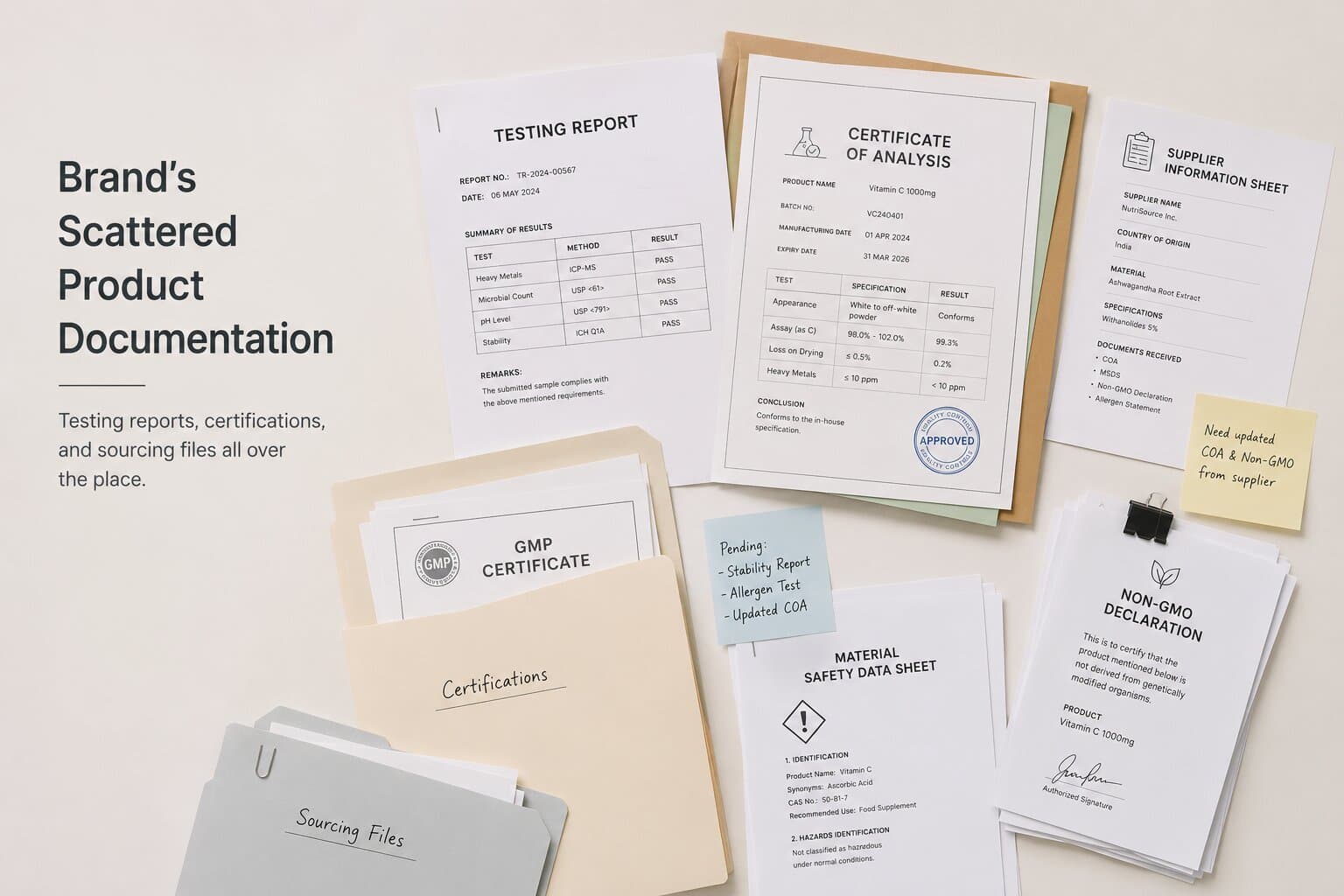
Usually, it’s scattered across a few places:
- A clinical summary that might be posted on the brand’s website, if you know where to look.
- A certification filed away as a PDF in a "Resources" or "Downloads" page most visitors never open.
- Ingredient sourcing details that only surface if a customer emails support directly and waits for a reply.
For a customer who genuinely wants to understand a product before buying it, and a growing share of shoppers do, especially in skincare and wellness, this fragmentation is genuinely frustrating. You either take the label claim on faith, or you go digging across multiple sources and hope you find something useful. Regulatory guidance like the FDA's cosmetics labeling rules exists precisely because "tested" and "free from X" claims can mean very different things depending on how they’re substantiated.
What Should Change
The claim itself isn’t the problem. Brands make these claims because the underlying work (the testing, the sourcing, the documentation) is real and often significant. The problem is the gap between the claim and the information that supports it.
That’s the gap TruOrigin was built to close. Instead of a label phrase with no easy path to more, TruOrigin connects each claim directly to its supporting information: test summaries, certifications, ingredient data, all presented in a format customers can actually explore, without needing to read a full lab report or hunt through a website. It’s the same structure we cover in The Claims on the Pack: What Should You Actually Look For, which walks through the specific questions worth asking before relying on any label claim.
Our framework is simple: Claim → Evidence → Clarity. A claim on its own is a statement. A claim connected to its supporting information is something a customer can actually evaluate for themselves.
Curious what this looks like for your own product line?
Book a demo →